CAD drawings and 3D models for machine parts

Bring a broken part, a sketch on paper or just an idea. We make a 3D model of it and a drawing that any workshop can make it from.

Part drawings with sizes and tolerancesCopying a part from a sampleSheet-metal flat patternsLaser and CNC cut files (DXF)Fabrication drawings3D models (STEP) for any CAD software

What this is

CAD means computer-aided design. Instead of drawing a part by hand, we build it on a computer as an exact 3D model. From that model we make the drawings a lathe operator, fabricator or laser-cutting shop works from, with every size, every hole and the material marked on it.

It helps when a part breaks and nobody has a drawing for it, when you want the same part made again in larger numbers, or when you have an idea for a new machine and want to see it before spending money on metal.

Who it is for

  • Workshops and fabricators who get jobs without drawings
  • Small factories that need the same part made again and again
  • Flour mills, pump and motor repair shops, farm machinery makers
  • Shops that want a laser-cut display, sign or stand
  • Students and inventors with a machine idea

What you get

  • A 3D model of the part (STEP file, opens in any CAD software)
  • A drawing sheet with all sizes, as a PDF you can print
  • Flat patterns for bent sheet-metal parts, showing where to cut and bend
  • Cut files (DXF) for laser cutting and CNC machines
  • Rendered pictures of the part for quotations or catalogues

How it works

  1. 1Send the part or a sketch

    A photo with a ruler or measuring tape next to it, a hand sketch with sizes, or the part itself.

  2. 2We confirm the details

    Material, number of pieces, and anything the part has to fit with.

  3. 3We model and draw it

    You see a picture of the 3D model before the drawing is finished.

  4. 4You get the files

    Drawings and files on WhatsApp or email, ready for your workshop.

What to send us

  • Clear photos from a few sides, with a ruler in the picture
  • The main sizes, if you can measure them
  • The material, if you know it
  • What the part fits into or connects with

Our work

Our work

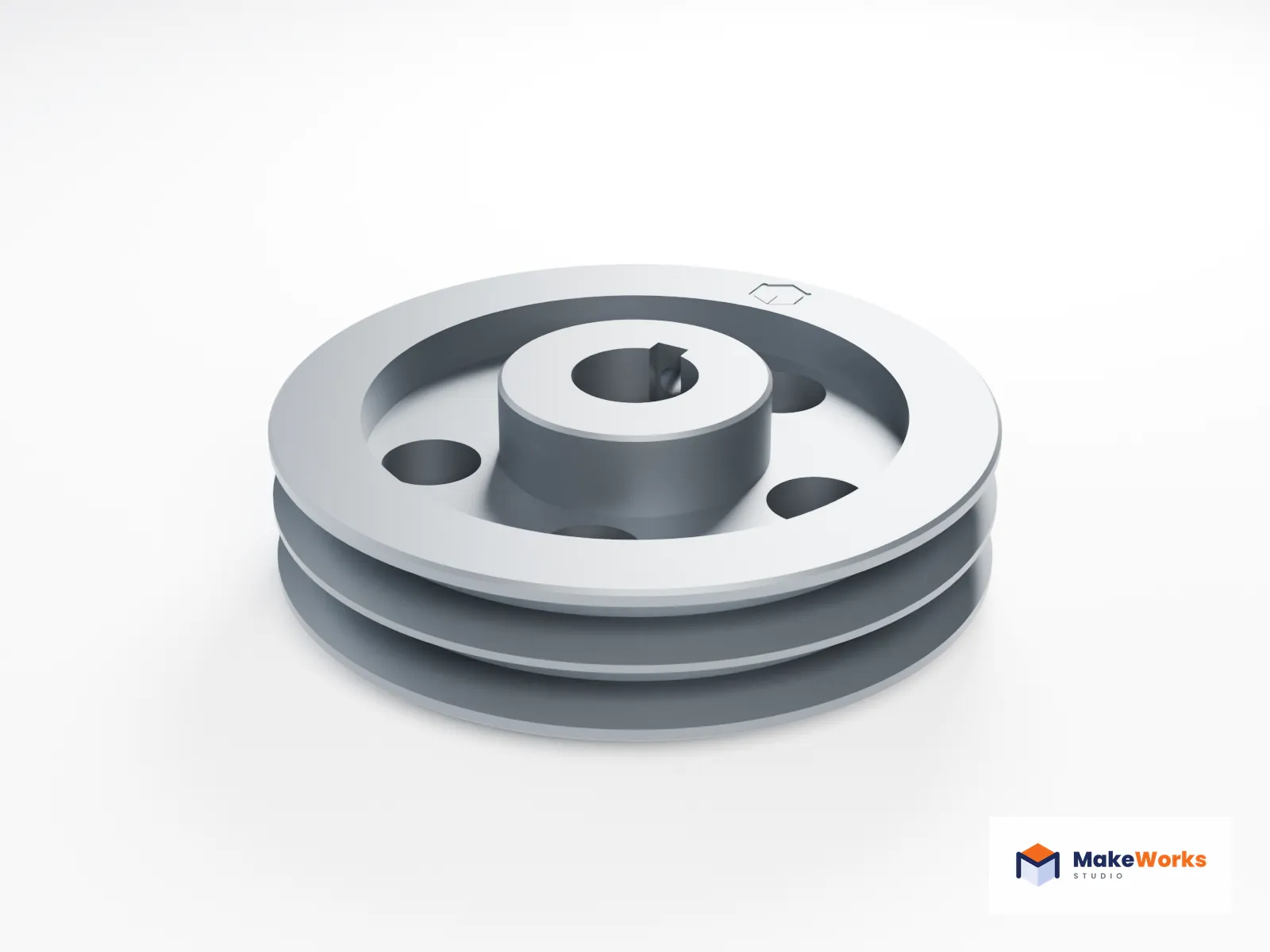
Atta chakki V-belt pulley

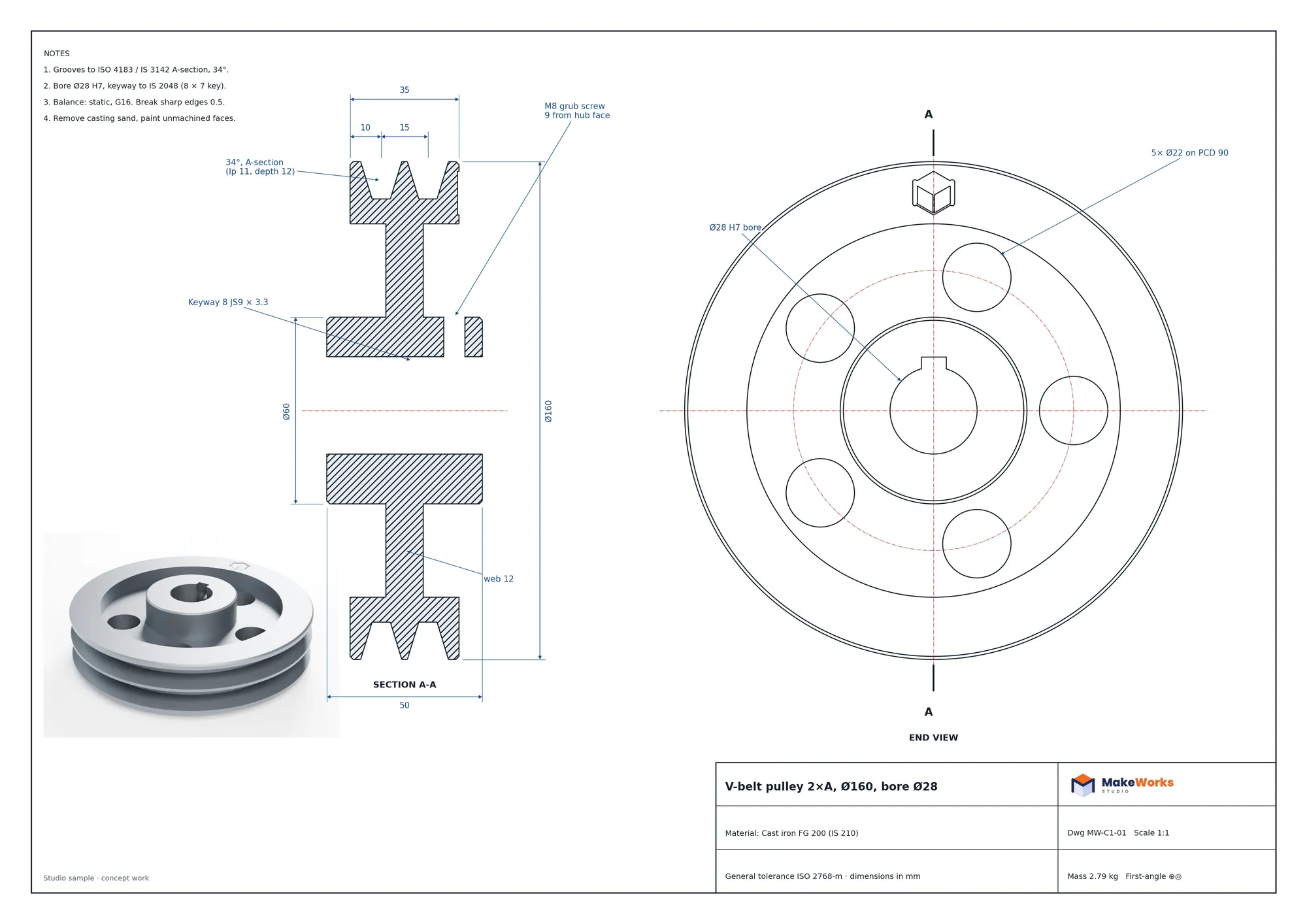
The kind of pulley a flour mill wears out. It has two grooves for standard A-size V-belts, a keyway and a grub screw to lock it on the shaft, and holes that make it lighter. The drawing includes a cut-through view so the machinist can see the exact groove shape.

  • 160 mm across, 28 mm shaft hole
  • Cast iron, 2.8 kg
  • A3 drawing with section view

The client getsDrawing (PDF)3D model (STEP)
Our work

Laser-cut shop display stand

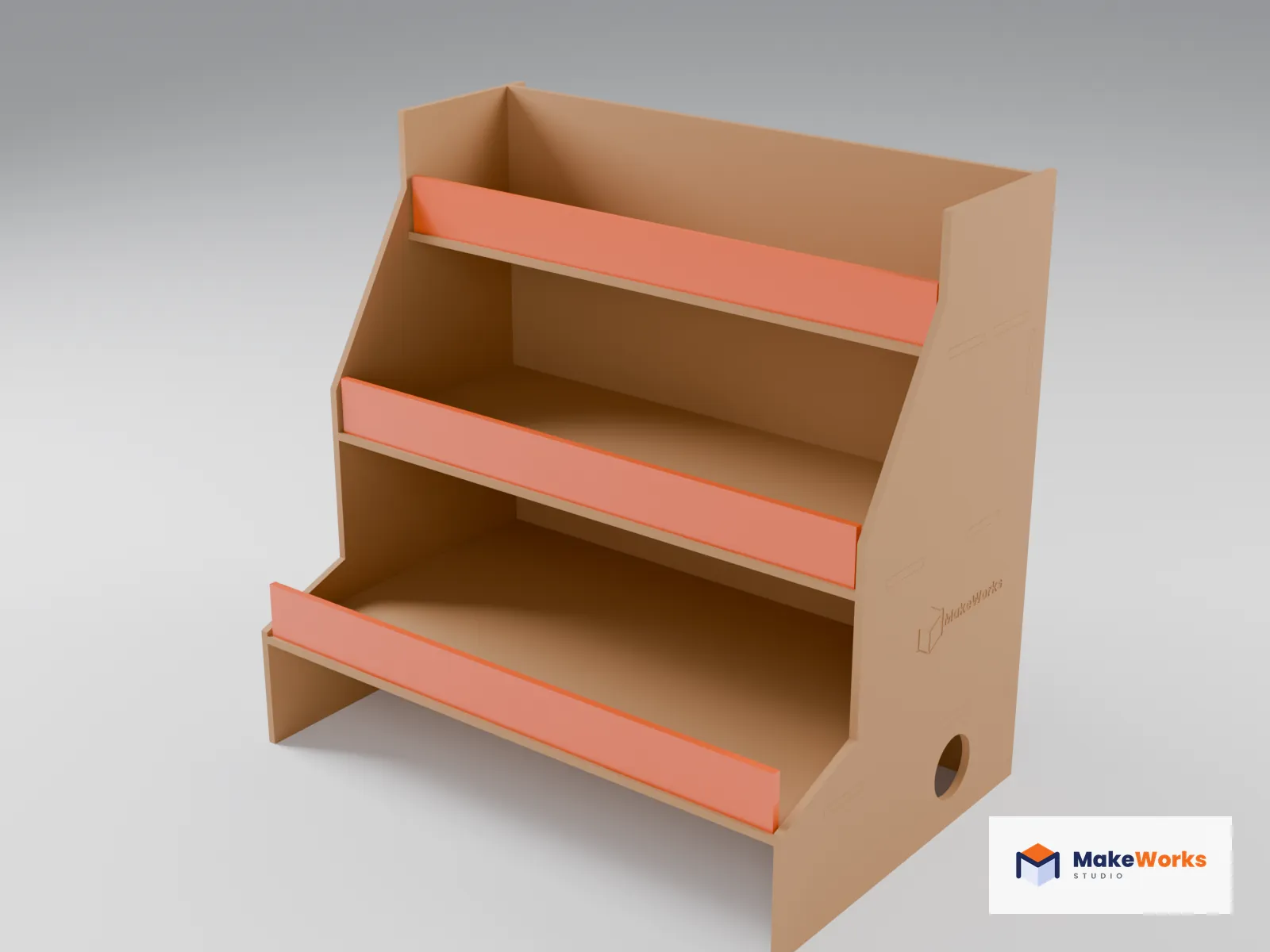
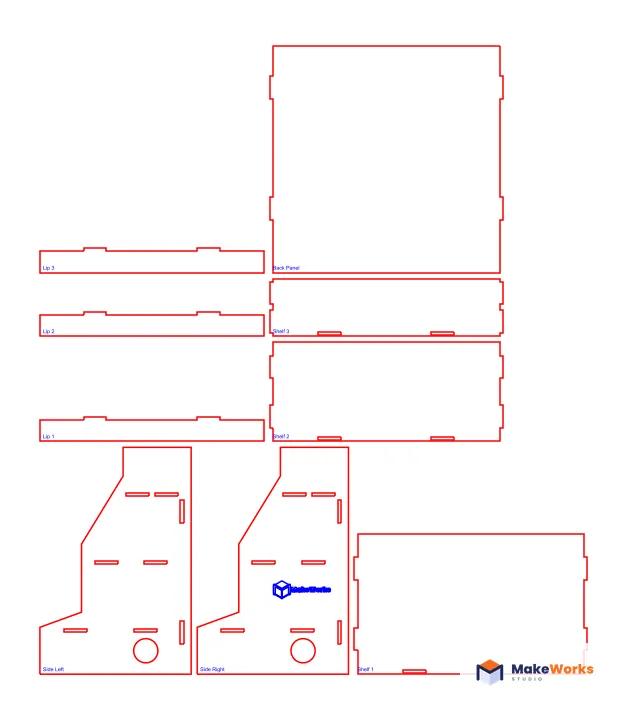
A three-shelf counter stand for a shop. Its nine flat parts slot together without glue or screws, and all of them fit on one sheet for the laser cutter. The MakeWorks mark is engraved on the side.

  • 4 mm MDF with acrylic shelf lips
  • Slots together, no glue
  • Laser cut file ready

The client getsCut sheet (DXF)

Our work

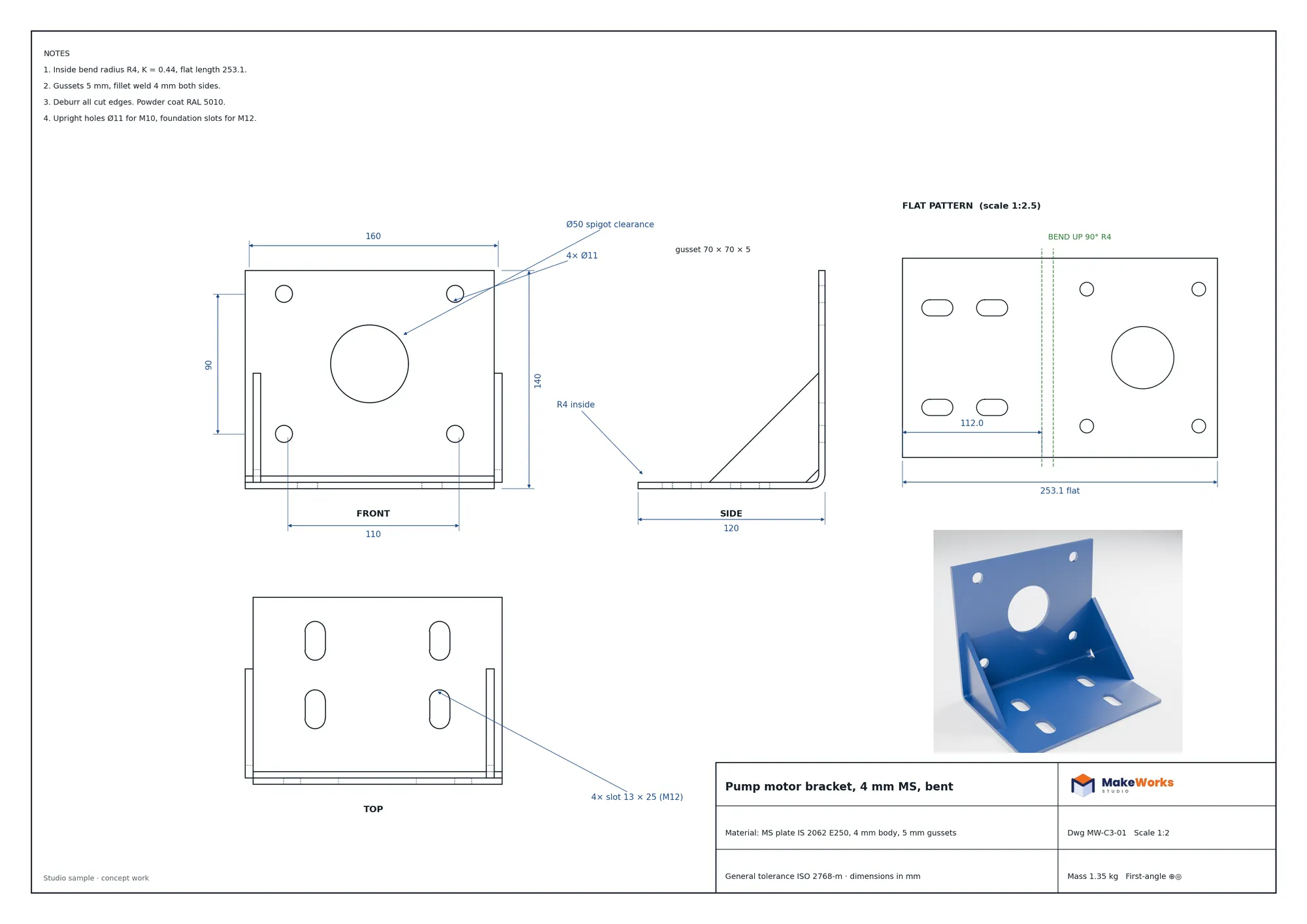
Pump motor bracket in sheet metal

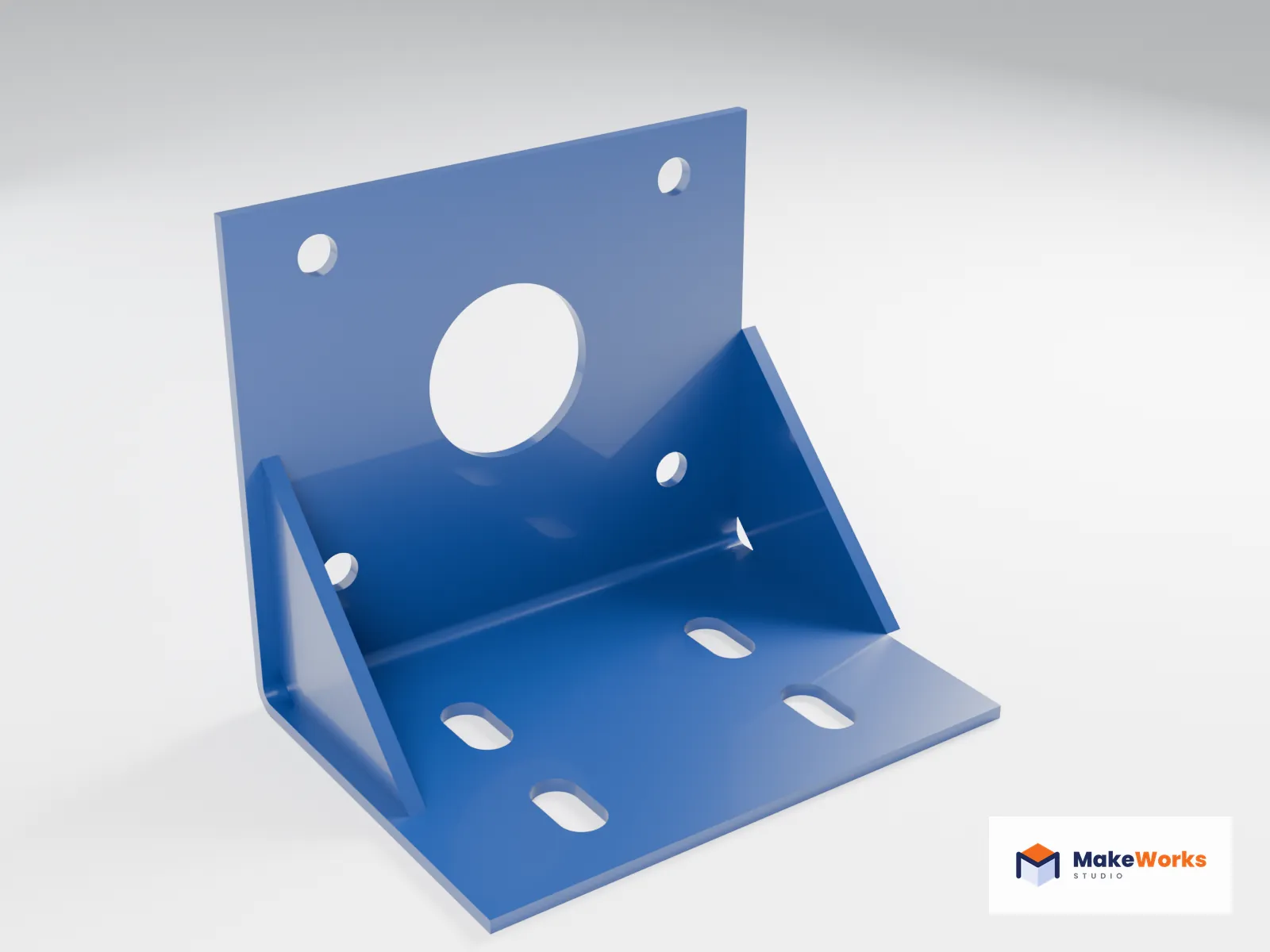
A bracket bent from 4 mm mild steel to hold a monoblock pump. Welded corner plates make it stiff, and slotted feet let the fitter adjust it when bolting down. The drawing shows the flat shape before bending, so the fabricator can cut and bend it without guessing.

  • 4 mm mild steel, 1.35 kg
  • Flat pattern included
  • Slotted feet for alignment

The client getsDrawing (PDF)Flat pattern (DXF)

Questions people ask

I only have a broken part and no drawing. Can you still help?

Yes. This is called reverse engineering. We measure the part, or work from clear photos and your measurements, and model it again. Where the part is worn or broken, we work out what the original size was.

Which files will I get?

Usually a PDF drawing to print and hand to the workshop, a STEP file of the 3D model, and DXF files when the part is going to be laser or CNC cut. Tell us what your workshop uses and we send that.

Do you make the part as well?

We make the design and the drawings. Any lathe shop, fabricator or laser-cutting shop can make the part from them. Small plastic parts we can 3D print ourselves.

What is a tolerance, and why does it matter?

A tolerance is how much a size is allowed to vary. A bearing seat or a shaft hole needs a tight tolerance or the part will not fit. We mark these on the drawing so the machinist knows which sizes are critical.

Can you make a drawing from a rough hand sketch?

Yes. A sketch with the main sizes is enough to start. We ask about anything that is not clear.

Tell us what you want made.

Send a photo, a sketch or one line on WhatsApp. We reply with an idea, a price and a date.